Wednesday, April 18, 2012


Walkers, Not Runners, Win the Race!

       Do you remember the children’s story of the Rabbit versus the Turtle?  Who won?  The turtle isn’t it?

           In a race, the turtle will win!

         I know that’s a different story and that makes the previous statement controversial. But before my marathoner friends and readers howl in protest, I’d like to inform you that I’m talking as an orthopedic surgeon (with subspecialty training in hip and knee reconstruction) giving advice to previously sedentary people.  Yes, previously sedentary people who may not be as fit like you.

       So, let me begin by saying that to jumpstart a journey to a healthier lifestyle, I believe that walking -- a sport that doesn't require athleticism or expensive equipment -- is enough. Any person in any age group can’t go wrong with walking. 

What are the advantages of walking over running?

 1.      Walking and running are both effective aerobic exercises (activities that burn calories and improve your overall fitness level by moving large muscle groups for a sustained period). However, running is considered a vigorous exercise, while walking is a mild to moderate exercise. With running, each time your foot strikes the ground, the impact causes trauma to the weight bearing joints, especially the knees. Walking briskly causes impact as well. However, the impact is much less.

2.      While both activities can leave you sore at first, running is a higher intensity and impact type of exercise, thus, runners are generally more prone to injuries than walkers, especially if they don't stretch and warm up. I’ve seen more shin splints more frequently now than before because of the popularity of running nowadays. They can crop up if you overdo your running workout or wear shoes that don't give proper support. So make sure you are using a sturdy, stable pair of shoes.

3.    Walking works better if you're beginning an exercise program or are severely out of shape. (Yes, I know that round is a shape. I know that joke).  You can always gradually work up to a run.

So, is walking enough?

        The reason I say walkers, not runners win the race, is because walking is much more equal-opportunity when it comes to different fitness levels. Both of them can be beneficial. But if you are deciding whether running or walking should be part of your fitness regimen, the very first thing to consider is your fitness level, and how much impact your joints can absorb.

       Ask yourself: How much weight are you carrying? 

       Look at the mirror.  Do you think you had taken too much food in your life? :)

     Reports say that every extra pound you carry adds up to 3 pounds of pressure on your knee joints when you walk, and 10 pounds more when you run. In fact, obesity is one of the biggest risk factor for developing osteoarthritis because it speeds the breakdown of cartilage or the shock absorber in your joints. Losing extra weight -- particularly body fat -- may be the single most important thing you can do to reduce the risk of developing a serious knee problem. In a study reviewed by the National Institutes of Health in the US, overweight people who lost an average of 11 pounds had their risk of osteoarthritis decreased by 50%.

      Friends, we put an enormous amount of mechanical stress on our knees on a daily basis. And, typically, the knee is bound to take it, being a weight-bearing joint. Certain bad habits could be shortening the life of your knees and opening the door to chronic pain and disability.

Summary

        Running and walking are good sources of aerobic exercise. But running, compared to walking, requires a higher fitness level to begin with due to its higher intensity. Although walking is a slower and a more boring way to get fit, it can also be a lot more comfortable if you suffer from a number of conditions or are new to exercise. The best exercise is the one that matches your fitness level and is enjoyable enough for you to stick with it. A big mistake most people make is doing too much too soon when it comes to running. Starting slowly will condition the joints and the different systems of the body to acclimatize to more aggressive workouts in the future, while avoiding common injuries, especially to your knees.

             As for me, do I walk or run a marathon?  Obviously, I follow my own advice.   I do walking, not running.  I also bike (that would be another post topic) and lift some light weights. I also do stretching exercises in front of the bathroom mirror and do some poses ala Hulk Hogan or Ultimate Warrior (If you don’t know them, you’re not my age). J

“You don’t have to be a jogger or a marathon runner; all you have to do is move” — Dr. Paul Bendheim, author of “The Brain Training Revolution”
Walk, run, bike, swim.  It’s up to you.  As long as you move!

P.S.
By the way, there is a diet/fitness "level-up" website with app created by a dear reader Ms Christine Chu. If you want to check it out, or use it, it's at slimkicker.com. It may motivate you to stick to your fitness/ weight loss goals.  Goodluck!

Thursday, April 5, 2012

Ortho or Rehab doctor?


     Enjoy your five-day-long weekend for Lent this year. For some, it’s an opportunity to meditate, do some soul-searching, but most intend to go out of town and get some much needed R and R.  I also know that it’s a wonderful time to just stay home, rest and spend some quality time with the kids. Personally, I’m going for the latter because if I go to the beach, I will just see more people than sand. =)

       Now for this post’s topic, I will discuss a question that was asked by a medical classmate before. Recently, a patient came to me, asking the same question. 

      The patient was somewhat apologetic, because he thought he might have come to the wrong doctor.  I greeted him first and introduced myself as an orthopedic doctor.

      “Why?  What is your complaint?” I asked.

     “I have pain in my shoulders and other joints in the body. Sorry doc, should I have come to a rehabilitation doctor instead?” he said.

      So what is the difference is between an orthopedic doctor and a rehab doctor?

      If you feel some pain or discomfort in any part of your extremities and back, will you go to an orthopedic or rehab doctor?

     My honest answer?  To an orthopedic doctor, of course! (obvious bias?)

     But seriously, what is the difference between an orthopedic and a rehabilitation doctor?

      An orthopedic doctor is a doctor who specializes in  treating individuals who have conditions that involve the bones, joints, nerves, ligaments, tendons, and muscles. Also known as an orthopedic surgeon, (orthopedic doctors are surgeons, rehab doctors are not) a person in this field typically works to diagnose and care for patients who have suffered such things as broken bones, torn ligaments and tendons. Essentially, our job is to diagnose patients and uses both medical and surgical techniques in treating disorders and conditions of the parts of the body that allow movement, the musculoskeletal system. 


total knee replacement surgery


      The orthopedic doctor is also the person to order a range of tests, such as x-rays, MRIs, CT scans if deemed necessary, and other types of imaging procedures since we, ourselves, can interpret them.

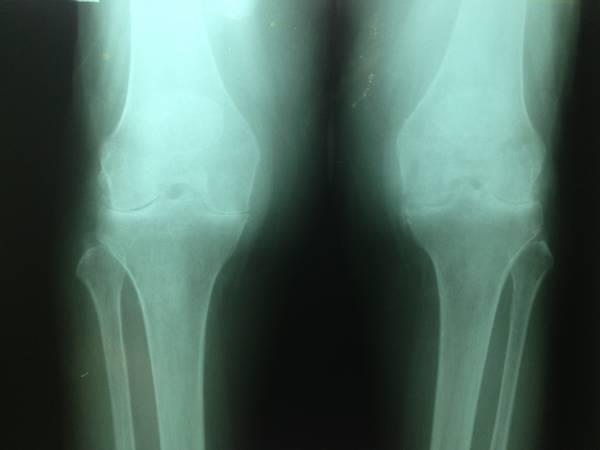
severe knee arthritis xrays


      An orthopedic surgeon typically is the right doctor to go to during emergency situations that involve the extremities and spine.  When you have broken bones, suffer compartment syndrome or have septic arthritis requiring surgery, don’t go to the emergency room looking for a rehabilitation doctor.


     While we, orthopedic doctors, may be best known for helping people with broken bones, some of us may choose to focus on correcting deformities, such as deformed hands or feet, straighten spine or on injures that stem from participation in sports. There are some who specialize in treating disabled and injured children while others may focus on treating tumors, infections, and degenerative diseases or hips and knees, such as I.


     Aside from that, we orthopedic doctors are trained to do a lot more. Doctors in this field also do casting and splinting procedures, injection procedures, provide treatment for cartilage regeneration and application of platelet-rich plasma.


      Rehabilitation doctors, also known as physiatrists, on the other hand, are trained in the rehabilitation of orthopedic and neurologic disorders, and in the long-term management of patients with disabling conditions, such as stroke. Physiatrists provide leadership to multidisciplinary teams composed of therapists, to provide maximal restoration of physical, psychological, social, occupational and vocational functions in persons whose abilities have been limited by disease, trauma, congenital disorders or pain to enable patients to achieve their maximum functional abilities.


     Summary

     It is true that some patients have overlapping conditions that require the care of both orthopedic and rehab doctor. We, orthopedic and rehab doctors, work hand in hand to provide maximum benefit to patients with orthopedic conditions.  While it is the orthopedic surgeon who should initially see the patient especially in emergency situations, it does not really matter who see the patients first, as long as both the orthopedic and rehabilitation doctor know when to appropriately refer the patient for proper management. 


with my post-hip replacement patient

Thursday, March 29, 2012

My Children Invest in the Stock Market, and why I think yours should, too!


         Long time no hear.  I know.  Been busy. Anyway, does this blog’s title sound familiar?  If you’ve read the best-selling book of Bo Sanchez, about his maids investing in the stock market, you should find this title familiar.

          This is the reason why I actually had a long time off from writing in this blog.  Aside from my orthopedic practice, I got hooked up financially educating myself.  So for this post, I will not talk about any orthopedic problem but a common problem of start-up doctors, being FINANCIALLY ILLITERATE.

         Being a doctor, a specialist and a subspecialist at that (I have fellowship training in hip and knee joint reconstruction, just in case you forgotJ) with several letters after my name (MD, DPBO, FPOA, FPCS, ABCDE, - ok just joking on the last one), I thought that I am highly educated, and that success will be proportional to my academic success.  I am highly-credentialed, I should earn money. (That’s what my parents told me.  Study hard, get good grades, top the boards (I wish) and you’ll get your first Jaguar car in no time. )

          But while it’s true that pursuing high academic knowledge is important, I realized that it’s not always directly proportional to financial success.  In fact, sometimes, it’s inversely proportional!

          My journey to financial education started with reading Robert Kiyosaki’s Rich Dad, Poor Dad. I learned there the definition of being financially free.  And my interest in investing was fuelled by the book of Bo Sanchez with almost the same title of this blog.  You see, most new start-up doctors, including me, have always complained (I am still complaining) of the difficulty in starting private practice, especially in Metro Manila. The obstacle course of setting up our practice sometimes is too difficult to overcome . Too much competition, too little reimbursements.

          Society (and BIR) thinks that doctors earn very well, but doctors sometimes just need to project that image in order to attract patients, or get a referral.  We need time to build our practice.  I also realized that while our senior colleagues are very willing to help us deal with our difficult cases, they are usually not willing to help us in our private practice, unless you are the son or daughter of a doctor.  Whether we like it or not, we are their competition. And why would a doctor, or any person, tell the secrets of the trade to a competitor? Life is unfair, get used to it - Bill Gates.

             So, instead of complaining and procrastinating , I just thought that there must be a way to deal with this.  In between patients or surgeries, I tried to educate myself financially to increase my financial literacy.  In this information age, there are a lot of blogs in the internet about financial planning and investments.  I tried to learn on my own. I realize that people have different investment philosophies, investment risks or appetite, but all of us must invest, especially doctors. Because no work, no pay.  I know of colleagues who are high-income earners but are poor.  How can that be?  Because their expenses are higher than their income.  Besides, all rich doctors I know have investments.

            Now, going to the title of this blog, why did I use this? Before I read Bo Sanchez’ book, I thought that the stock market was like an alien monster.  My colleagues who dabble in this, spoke in some language spoken only in another planet.  I couldn’t understand them. But I learned that you can invest in the stock market using the book “My Maid Invests in the Stock Market”, for as low as P2,000!

             So now, I put some money of my kids in the stock market, hoping it will grow as they grow up.  The growth will not be a straight line, but history says it will grow.

              While doing surgeries, or seeing patient in the clinics, money is growing for them.

               Isn’t that great?

Monday, January 23, 2012

Hilot for Your Lamig: Is it Okay?


      One of the most common question I get from my patients is this:  Doc, ang dami kong lamig. Ok lang ba magpahilot or magpa-massage?  (Doctor, I feel muscle spasm in several areas of my body. Can I have them massaged?)

       My answer?  It depends. 

      First, let me educate my non-Filipino readers. The literal translation of lamig means cold, but it may mean more than that in our culture. The closest medical translation is probably “muscle spasm or pulled muscle”. When we, Filipinos, experience pain somewhere in our body, we say we have lamig.  This belief has lived since the time of Lapu-Lapu, and has been passed on for generations, especially in the lower socioeconomic classes. In fact, it’s not uncommon that patients get massaged for their “lamig”, before they come and see us medical professionals.

      We, orthopedic surgeons, generally sneer at the term “hilot”.   But massage is okay. (For this article, we will refer to hilot and massage as one and the same.)

      Just like some of you, my wife and I also go to spas and we occasionally call massage therapists to massage us at home.  With our fast-paced, stressful lifestyle, having a massage or hilot can be beneficial. With the use of those scented, aromatic oil, massage can relax your muscles, can improve your circulation, and can improve your immune system, BUT not always. 

     Here’s a body massage story that I’ll never forget.

        My wife and I called a massage center where we asked for a home service. The receptionist recommended this person, praising her skill to the highest heavens. She told me this lady will pulverize all my lamig and I will feel better afterwards. With those glowing description,  “Alright. Sounds good.”  I said. ‘Let’s try that.”

      The massage therapist came to our house on time.

         As I opened our airconditioner, I glanced at her. 

      She was probably barely 5 foot. Mid-twenties. Bordering on thin. 

       Hmmmmm. Pretty harmless, I thought to myself.

        My wife pulled out a mattress on the floor of our bedroom and lay down. She wanted to go first. 

         “Sure, after you, Hon.” 

          As the lady started massaging her, I sat on a chair a few feet away, opened my laptop and surfed on the internet. I looked on Ludette’s face: She looked so relaxed. After a few minutes, she appeared half-asleep. I got excited. Can’t wait to relax and sleep too. 

         After an hour, my wife finally stood up and said, “That was great! Hon, now it’s your turn.” Oh finally. I did a little bit of stretching before I lay down.

      The lady knelt on my back and started massaging my back.

             Ahhhh.  Sarap.

             At least, for the first few seconds.

     After that, it was pure torture. Pure, unadulterated, Gen. Palparan torture!

            During her massage, I reached levels of pain I thought never existed.

           Her thumbs were like Jack Hammers, with my head bouncing up and down. It was like a Sumo Wrestler was massaging me.  

          As I lay on the mattress being massacred, I mean, being massaged, I wondered if I offended the receptionist who recommended her to me—that this was her way of revenge.  And I knew I paid the last time. 

          In the entire massage, I groaned aray (ouch) the whole time. I wanted to scream, but my neighbours may think I was being raped. So I just bore the pain.

         She told me I had several lamig in my body and that may got her obsessed. She went berserk when she found several areas of lamig in my body!

         My wife came up to me and with a smile asked, “Are you enjoying it, Hon?”

           I whispered to her, “How come you enjoyed this? I feel I’m being run over by a bus.”

      She laughed. I added, “Please call the Department of Justice.  I think this is Gen. Palparan in disguise. “

          After that, I promised not to get that “torturer therapist” anymore.

Take home message

     Massage or hilot for lamig, has long been ingrained in our culture.  It has possible medical benefits.  But not all massage therapists are the same.  It is important that during the time of the massage, you should not let the therapist “torture” you if you feel you are not feeling good about it.  You have to inform the therapist to change her style or just have the process stopped if it is causing you more pain than relaxation.  

         Good luck on your massage!

Sunday, January 8, 2012

How to Fail, with your Ingrown Toenail


For this post, I’d like to talk about one of the greatest and eternally significant orthopedic problem that orthopedic surgeons see almost daily: the ingrown toenail :)


Here’s a gory story of my patient with an ingrown toenail:

I had a patient who, would you believe, had an ingrown toenail which lasted for more than a year? I saw her more than a year ago, advised her that we should take a portion of the nail out, but I never saw her again after that.  A few days ago, lo and behold, I saw the patient again, as if resurrecting from the dead. She told me she tried doing some “bathroom surgery” on her own, that’s why she did not come back. But because the nail kept re-growing, puncturing the wound again and again, the wound got infected and the entire toe became filled with foul-smelling yellowish pus. (eeyucccck!)

I wanted to scare her to death by saying that if the wound doesn’t get well, I might have to cut off her toe!  (Scare tactics don’t work anymore. Look at the recent firecracker injury victims).

So I asked her “Do you love your toe?

“Of course, Doc.”

“If that’s the case, we have to pull out half of your toenail.”

Her jaw dropped. The next thing I saw, she was sprawled down on the floor. It turned out she fainted from what I told her.

After she regained her bearings, she finally consented to the procedure. However, the anesthesia didn’t work because of the pus. She told me the pain was horrific, that she was ready to recant anything I told her to recant, including the time she told me I was not handsome. (Pardon me for my hallucinations).

To summarize what happened, I cut her nail into two, and got my new shining metal pliers to yank the cut half.  My nostrils were attacked by a terrible stench because pus oozed out, with a little bit of bloody fountain coming with it. I then cleaned the wound well, including the nailbed underneath the nail.

(Note: I skewed a little bit in my description of the procedure. The local anesthesia actually worked but because I just want to gross you out, I exaggerated a bit. :))

And now, I hope you know what happened next.

It worked. 

The wound slowly healed over the next few days. 

Take home message

Ingrown toenails are extremely common but rarely get better. You may try treating it yourself but I would advise that you see a professional like an orthopedic surgeon to evaluate and treat you properly.  This story of my ingrown toenail patient looks simple and harmless. But it’s the story of the entire human race: People get stuck with problems since the time of Magellan. But while these problems may last for a long time, it takes only a few days or weeks to heal, after you have finally decided to do the right thing.

Blog Archive