Showing posts with label orthopedic surgeons. Show all posts

Sunday, July 22, 2012

Carpal Tunnel Syndrome


            One recent patient I had was a pleasant old lady who had a condition called carpal tunnel syndrome.  Since I can’t think of a more boring orthopedic topic to cover right now, I decided to tackle this and see if I can offer something unique on the subject.
       My patient was a 70-year old lady who has been suffering from pins and needles sensation on her right hand.
       Her name is Lola Phoebe. Actually, her real name was Lola Pebang. But she told me she took a vacation in America, when she came back after 2 weeks, she was now called Lola Phoebe.
       Anyway, she has taken pain medications and vitamin B complex, as prescribed by an extended family member, specifically, a friend of her sister’s neighbor’s niece’s classmate (whew). She did not improve and told me she had episodes of dropping objects from her right hand because of pain and occasionally being awakened at night due to pain. Her symptoms gradually worsened until the pain and numbness became more often.  How often? Everytime she breathes.
      On examination, her hand has some evidence of atrophy or thinning around the ball of the thumb muscles, and symptoms isolated to the first 3 fingers of the hand. Thus, the clinical impression of carpal tunnel syndrome was made.
       So now, what then is a carpal tunnel syndrome?
    The carpal tunnel is the canal-like passageway on the palm side of the wrist through which several tendons and a pencil-sized nerve, called the median nerve, pass through on their way to the hand from the forearm. The canal is bordered by some of the bones of the wrist and the strong ligament the binds the bones together, called the transverse carpal ligament.  This ligament forms the roof of the tunnel.
     When the transverse carpal ligament thickens (parang kinalyo), the canal decreases in size, compressing the median nerve that leads to the occurrence of signs and symptoms such as those experienced by my patient. These symptoms are collectively referred to as carpal tunnel syndrome.
      Carpal tunnel syndrome (CTS) is a relatively common painful ailment that affects women more than men. People with CTS usually complain of pain in the hand associated with numbness and tingling over the thumb, index finger, middle finger and part of the ring finger. The pain may radiate into the forearm and occasionally into the shoulder and neck. It is aggravated by activity and may awaken the patient at night. If nothing is done to relieve the nerve compression, the signs and symptoms may progress and atrophy or thinning of the muscles at the ball of the thumb may ensue.
       Carpal tunnel syndrome can be secondary to conditions in the wrist such as inflammation of any of the tendons (tendinitis) that pass through the tunnel, fractures and tumors. Sometimes, it is one of the manifestations of a disease like rheumatoid arthritis, diabetes mellitus and thyroid disease. It is also associated with pregnancy and menopause.
      Most CTS patients have a history of holding jobs that require them to do repetitive motions with the hands and wrists for long periods of time. Hence, it is common in factory workers, seamstresses, housekeepers, even surgeons!
    Theoretically, people like you who extensively use computers to read my blog J should be prone to CTS. The only definitive cure for CTS is surgery.  It is a minor outpatient procedure where after the operation, the pain usually subsides within a few days and never recurs. Muscle strength also returns gradually except when the nerve has already been severely damaged.
       However, surgery, for most cases, is the last recourse for CTS. You should try non-surgical treatment first, which should include elevating the hand whenever possible,  splinting of the arm and hand, or physical therapy. If the above measures do not work, you could ask your orthopedic surgeon to inject your wrist with a steroid solution. But if conservative treatment fails, then consider surgery. 
        So what did I do with my patient?   She refused surgery for fear of dying during surgery (how morbid).   So I injected steroid into the carpal tunnel and so far, she is doing well.  She is also undergoing physical therapy right now.  As to how long this will help, nobody knows.   If you, however, want more definitive solution, then surgery should be considered. Remember, the problem is a compressed nerve. Therefore, the solution is to decompress the nerve.

       That’s it for now. Til the next blog post…..

Monday, June 11, 2012

4 Reasons Why Your Doctor Charges “High” Fees


“Doc, humihingi po ng discount yung pasyente,” my secretary said.
“Sige, bigyan mo na lang,”  I replied.

I know most of us complain about how high the cost of living has become nowadays. With the unrelenting march of inflation, it is inevitable that we have to pay for everything much higher, sooner or later. As a result, doctors' consultation and professional fees have also become higher. 

I know of some patients who complain, “This doctor charges high.  Why can’t he lower down his fees?” 

Consultation fees (CF) of doctors in Metro Manila probably varies from P300 - P1,000, depending on his/her specialization.   Some people will spend for cell phone load, a new shirt, even a meal at P300 easily.  But they can’t spend for their health.

Some patients may complain to themselves, “Why do we need to pay P500 for this doctor’s CF when we can get it cheaper from other doctors?”

Here’s how I’d like to answer that:  “When I was an intern at the Philippine General Hospital (PGH), I treated every patient for free. Every so often, I did 24- to 48-hour straight hospital duty, and did that for free. When I did my residency training at the Philippine Orthopedic Center, we were paid a measly government salary, just enough for a frugal bachelor. When I did my subspecialty training abroad, I had to pay for my airfare, visa fees, insurance and lodging. When I started private practice, I had to borrow money from my parents to buy hospital stocks, privilege to practice or joining fee.  Now, I pay rent for clinic use, secretary's salary and utilities. 

So please bear with us that we have to charge P500 for consultation fees.

Some people may think, “But Doc, don’t you have rich patients who can pay you in full?”

Of course there are. But the mentality that “I want it free" or "Doctors charge too high!” is the attitude that will keep you poor in health.

Get rid of it. Earn money, allocate a budget for healthcare, and pay your way to good health.

  All right, I am biased.  I’ll admit it.  I’m a doctor. It’s just that I think doctors, especially surgeons, should be well-compensated.  Now that I have that disclosure, I’d like to explore four reasons why we, as a society, shouldn’t want physicians' pay to go lower.

1)    A Valuable Service
 What doctors do is valuable.  Inspite of all the whining about the high cost of health care, few people would argue that our job of saving lives, extinguishing worries, relieving pain or improving quality of life is beyond measure. 

Are there mediocre doctors? Sure. Are there bad doctors out there?  Of course.  But overall, physician services are extremely important.  Those who provide quality healthcare deserve appropriate compensation and gratitude for the service provided.  You don’t think twice about plunking down P30,000 for an iPhone, but balk at P500 to get a specialist’s opinion on treating a serious condition?  Where are our priorities?

2) The “Lost” Life
The 20s and early 30s are the prime of life.  That's the age people typically enjoy good health and are often free from family responsibilities. But for doctors, this was the age we did basic medical and specialty training, and when we came out of this, it’s as though we lost contact from the world for more than a decade.  How long is medical training to be a specialist?  12-15 years.

“Never again," is the unanimous phrase we utter when we reminisce about our medical internship days. We’ve lost friends, missed family reunions, and even suffered through the loss of important romantic relationships. (Most of us, however, found our life partners during our medical training years, because we are the ones who understand each other’s schedule and hardships.)

3) A Difficult Job
When I was growing up, I thought that you had to be paid well to do a difficult job.  If a job required hard work, long hours, odd hours, or a great deal of stress, it should pay more.  That’s what my parents told me.  So I entered medicine-- long hours, constant stress of misdiagnosing or not treating someone properly, bureaucratic hassle imposed by government or insurance-- and you’ve got a hard job that deserves to be paid well. 

If a businessman makes a mistake, he can just try to recoup his financial loss with better management. If a teacher makes a mistake, he can tell his or her class the next day about the correction. If doctors make a mistake, life is at stake. No room to mess around.

Don’t get me wrong, I know everyone’s job is difficult. And if you can’t stand the risk, get out.  But what field or career does constant liability or the probability of being sued hang over one’s head?  If there is no financial compensation for this, then intelligent people would not want to go into medicine.

4) An Expensive Course
Just ask any parent who has or had a child in medical school.  With 12-15 years of training, parents often end up  supporting their doctor-children even after they have married and have children themselves.  Some parents even get buried in debt just to send their children to medical school.

Take Home Message

I apologize for the whining tone of this post, but I just want to reply to patients who keep accusing us of charging high fees.

If our society demotes doctors from their status as well-paid professionals, our society is going to get what it deserve. We’ll regret the day we decided that quality health care wasn’t worth paying for.

I love being a doctor. Medicine is one of the noblest, if not the noblest of all professions. The opportunity to heal and care for humanity was bestowed upon our profession.  But being a doctor is a difficult job that requires leadership, intelligence, compassion, decision-making skills, continuous education (disease, treatment, and technology change almost every year!), decades of dedication, stress, and lastly, expenses. 

These, I think, are the reasons why your doctor charges you with “high” fees.

       What do you think?

Thursday, April 5, 2012

Ortho or Rehab doctor?


     Enjoy your five-day-long weekend for Lent this year. For some, it’s an opportunity to meditate, do some soul-searching, but most intend to go out of town and get some much needed R and R.  I also know that it’s a wonderful time to just stay home, rest and spend some quality time with the kids. Personally, I’m going for the latter because if I go to the beach, I will just see more people than sand. =)

       Now for this post’s topic, I will discuss a question that was asked by a medical classmate before. Recently, a patient came to me, asking the same question. 

      The patient was somewhat apologetic, because he thought he might have come to the wrong doctor.  I greeted him first and introduced myself as an orthopedic doctor.

      “Why?  What is your complaint?” I asked.

     “I have pain in my shoulders and other joints in the body. Sorry doc, should I have come to a rehabilitation doctor instead?” he said.

      So what is the difference is between an orthopedic doctor and a rehab doctor?

      If you feel some pain or discomfort in any part of your extremities and back, will you go to an orthopedic or rehab doctor?

     My honest answer?  To an orthopedic doctor, of course! (obvious bias?)

     But seriously, what is the difference between an orthopedic and a rehabilitation doctor?

      An orthopedic doctor is a doctor who specializes in  treating individuals who have conditions that involve the bones, joints, nerves, ligaments, tendons, and muscles. Also known as an orthopedic surgeon, (orthopedic doctors are surgeons, rehab doctors are not) a person in this field typically works to diagnose and care for patients who have suffered such things as broken bones, torn ligaments and tendons. Essentially, our job is to diagnose patients and uses both medical and surgical techniques in treating disorders and conditions of the parts of the body that allow movement, the musculoskeletal system. 


total knee replacement surgery


      The orthopedic doctor is also the person to order a range of tests, such as x-rays, MRIs, CT scans if deemed necessary, and other types of imaging procedures since we, ourselves, can interpret them.

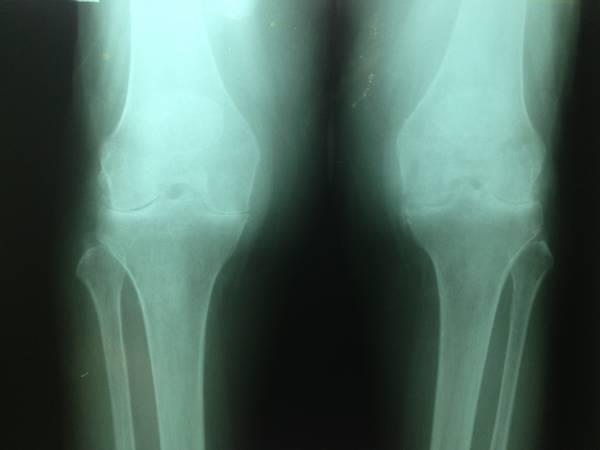
severe knee arthritis xrays


      An orthopedic surgeon typically is the right doctor to go to during emergency situations that involve the extremities and spine.  When you have broken bones, suffer compartment syndrome or have septic arthritis requiring surgery, don’t go to the emergency room looking for a rehabilitation doctor.


     While we, orthopedic doctors, may be best known for helping people with broken bones, some of us may choose to focus on correcting deformities, such as deformed hands or feet, straighten spine or on injures that stem from participation in sports. There are some who specialize in treating disabled and injured children while others may focus on treating tumors, infections, and degenerative diseases or hips and knees, such as I.


     Aside from that, we orthopedic doctors are trained to do a lot more. Doctors in this field also do casting and splinting procedures, injection procedures, provide treatment for cartilage regeneration and application of platelet-rich plasma.


      Rehabilitation doctors, also known as physiatrists, on the other hand, are trained in the rehabilitation of orthopedic and neurologic disorders, and in the long-term management of patients with disabling conditions, such as stroke. Physiatrists provide leadership to multidisciplinary teams composed of therapists, to provide maximal restoration of physical, psychological, social, occupational and vocational functions in persons whose abilities have been limited by disease, trauma, congenital disorders or pain to enable patients to achieve their maximum functional abilities.


     Summary

     It is true that some patients have overlapping conditions that require the care of both orthopedic and rehab doctor. We, orthopedic and rehab doctors, work hand in hand to provide maximum benefit to patients with orthopedic conditions.  While it is the orthopedic surgeon who should initially see the patient especially in emergency situations, it does not really matter who see the patients first, as long as both the orthopedic and rehabilitation doctor know when to appropriately refer the patient for proper management. 


with my post-hip replacement patient

Saturday, December 31, 2011

Welcome New year With Hope, not with Injuries!

         Happy New Year to everyone! No long blog post for today.  Just a quick greeting and reminder to everyone to welcome the coming new year with hope, not with injuries from playing with firecrackers!

          I know the Department of Health has been educating the public about the risks and hazards of playing with firecrackers, but the latest news as of this writing is that at least 200 have already been injured from playing with these firecrackers. Since orthopedic injury or disease prevention has also been my advocate, I might as well join them in trying to scare you. hehe

     The following are some pictures or the orthopedic instruments we use in the process of treating firecracker injuries

       The figure above is a bone saw. You know what a bone saw is? It is used to saw a bone.   (Sometimes, I get mesmerized by my own intelligence).   It's my favorite instrument.(joke)


       This is a Gigli saw.  It is also used to cut bones. The saw is composed of a wire blade and two handles.  Easier to use and more soft tissue-friendly than the first picture above.


       This is a drill, the same kind we use for house construction (I'm not kidding!). This is used to drill the pins or wires through the bone.

         As you can see, I'm trying to gross you out, and I'm having fun!


This is a mallet. It is used to pound on the chisel or osteotome to cut the bone smoothly.

     The above picture is an antenna-like structure called external fixator. It is usually used in wrist and forearm injuries to connect together broken bones.


      And now to scare the daylights out of you, my non-medical, non-ortho friends, the following is a picture of a firecracker injury...

 
photo courtesy of Dr Edsel Arandia
And another one....

Photo courtesy of Dr. Harem Deiparine

       Seriously, firecracker injuries are senseless injuries that are highly preventable and will have  great impact on your future.  You will definitely regret playing with one for the rest of your life.

Happy New Year and stay safe everyone!


Sunday, June 19, 2011

Rich Doc, Poor Doc

    After years and years of studying the minutest details of life and death, most doctors, especially clinicians in private practice, dream of a long line of paying patients queuing up outside their clinics.  And then reality sinks in. 

    The problem is, most patients don’t really enjoy going to doctors' offices.  For most, a clinic or a hospital is a place to go when there’s no other way to self-medicate their illness, or when something really hurts.  Otherwise, they avoid it.

        But there are doctors who have found success in their private practice.  They continuously attract new patients.  Their patients are very loyal to them and refer other patients. 

    One of them is my mentor.  He has trained countless orthopedic surgeons throughout the world.  His patients come from far and wide, and don't mind waiting for long hours.  And, he is truly rich.  

       I won’t mention his name. But by observing him, I have learned the five secrets of Rich Doctors:


1. Rich Doctors have excellent bedside manners and interpersonal skills. Communicating with patients is an art – often referred to as bedside manners.  It isn't taught in medical school, at least, not formally. Rich doctors know how to communicate with an open mind, a receptive ear and an empathetic heart. They talk to patients like they have all the time in the world.  They've perfected their bedside manners through practice, experience and feedback from patients.


2. Rich Doctors have a great sense of humor - How often have we heard, "laughter is the best medicine"? Joking about the pain that patients are about to experience helps to alleviate it.  When I have to do an unpleasant task, I try to inject a joke (pun intended), no matter how corny it is, and find that patients relax. "Masakit ba yan, doc?”, patients would ask. And I'd reply, "Di naman. Parang kagat lang-- kagat lang ng buwaya!”. ("Will that hurt, doc?" "Not really. Just like a bite-- a crocodile's bite.")  Laughing is a great way to deal with pain, loss or stress.  Give patients a reason to smile and they will feel ten times better already.

3. Rich Doctors are well-trained and up-to-date on their respective fields of specialization. This is self-explanatory. Patients go to doctors for their medical expertise.  You wouldn't like to go to a doctor whose knowledge or techniques are obsolete. The problem is, many doctors believe that this should be #1 on the list.  But Rich Doctors believe that, “patients won’t care about how much we know, until they know how much we care”. 

4. Rich Doctors are accessible.  How can patients “connect” with you, if you are nowhere to be found?  Once a doctor has committed to treat a patient, he should make himself reachable by phone, mobile or landline, especially during his scheduled office hours. But doctors who can be reached after office hours or in the dead of the night for emergencies are truly heroic and admired by patients.  When emergencies or other matters make him miss his regular consultation hours, the Rich Doctor will inform his or her staff, or have someone take over his place in his absence.

5. Rich doctors have good business sense.  Early in my practice, this reality actually shocked me.  But if you look at all those rich doctors, they have either business on the side, or are earning well from a medical-related business. That means they are earning from something else aside from their professional fees. They do this without compromising their patients’ care, in fact, they use this to improve the service they can give to their patients.  A businessman thinks of ways to please his customers and make them his clients for life.  A Rich Doctor thinks of ways to win his patients over, by giving them “over-the-top” medical care.  He doesn’t just prescribe medications and sends patients out the door. 


       But doctors are trained to be healthcare providers not necessarily business people.  If one aims to be a Rich Doctor, you must force yourself to step out of your comfort zone of simply treating patients, and start putting together a business plan.

       Really, the Rich Doctor secrets boils down to this: offering quality care in a warm and non-stressful environment, cultivating patient’s trusts, and inspiring them to tell others about it.


       Unfortunately, doctors, this is not a get-rich-quick scheme, but a recipe for becoming truly rich. Becoming a truly rich doctor goes beyond the mere possession of lots of money. For a doctor, becoming truly rich involves fulfilling his mission and passion in life and making a good impact on the lives of their patients. 


        I hope all doctors can live a truly rich life.

____________________________________________

Orthopedic Joke:


       As an orthopedic surgeon specializing in joint replacement, I often see patients in their senior years (60 yrs and up) consulting about arthritis and aching joints.  So I often get to hear about their twilight years’ travails.  On one such occasion, a patient complained that what she used to do effortlessly, she cannot do anymore.  She used to run up the stairs, now, she has to stop midway to rest her knees. But that’s not the worst of her problems, she said. “You run out of breath? You have chest pains?,” I ask. “No,” she answers, “The problem is that when I stop, I couldn’t seem to remember if I were going up or down.”


Thursday, May 5, 2011

3 Cool Facts About Orthopedic Surgeons


Most medical specialists have some kind of stereotype associated with them: Dainty dermatologists, nerdy neurosurgeons, friendly pediatricians... So that a male medical student who is tall or big, sports-minded and good-looking (Ok, maybe with exceptions to the last one), will most likely be told, “Uy, pang-ortho ka” ("You should be an orthopedic surgeon"). 

However, orthopedic surgeons are also stereotyped as menacing and intimidating.  Armed with tools of the trade such as drills, mallets and nails, an injured patient at the ER takes one look and freezes with terror.  In fact, an orthopedic OR pretty much looks like a carpenters' workshop with all the gadgets and tools--- only sterilized!


So what got me interested in orthopedic surgery  in the first place (aside from being tall, sporty and ...)?

Well, first of all, during my hospital internship,  the orthopedic consultants and residents I met were some of the coolest doctors around.  Other specialists were much too busy or cranky, in med lingo, “toxic”, but orthos always managed to keep their mojo.

Secondly, most orthopedic patients immediately feel the improvement in their condition. They come to the E.R. in severe pain or all broken and torn, then they go home relieved of pain, in one piece and all stitched-up. The sense of fulfillment in treating ortho patients was immediate and gratifying.

Third, I was amazed at the orthos' gung-ho attitude and knack for improvisation. 

For example, early in my training, one of the  first patients I encountered in the E.R. was an old patient  with a wrist fracture.  My senior resident instructed me on how to fix the fracture using an antenna-like structure called an external fixator.  The power drill needed to attach the device to the wrist could not be located, but since the patient was already anesthetized, we had to make-do with an ancient, rusty, hand-powered drill. (Did I say sterile? Yes, it was sterilized, rust and all!)  

As the senior resident showed me how to drill the bone, I got really nervous.  Prehistoric equipment older than my grandmother was definitely NOT going to work, I thought.  In spite of the lack of modern equipment, he deftly guided me from drilling my own hand and getting the treatment done.  As the pin went through the bone, I felt like a medic in a World War II hospital camp.  But the job was accomplished and I marveled at how cool this surgeon was about improvising when the situation wasn't exactly like ortho textbooks said it should be. 


In my city-based private practice, I still occasionally find my improv skills very useful, but glad  that I do not have to use it as often as some of my colleagues in the provinces.

These are some of the cool facts about orthopedic surgery that attracted me to this field of medicine. Besides, outstanding orthopedic surgeons has a nice ring to it, don't you think?

------------------------------------------------------------------------------
Orthopedic joke:

A 70-year-old man sat down in the orthopedic surgeon's office.
Patient: "You know, Doc," he said, "I've made love in more exotic cars than anyone I know. Must be at least a thousand."
Orthopedic Doctor: "And now, I suppose, you want me to treat you for the arthritis you got from scrunching up in all those uncomfortable positions,"
Patient: "Hell, no," the old fellow replied. "I want to borrow your Lamborghini."


Blog Archive