Showing posts with label orthopedic surgery. Show all posts

Sunday, July 22, 2012

Carpal Tunnel Syndrome


            One recent patient I had was a pleasant old lady who had a condition called carpal tunnel syndrome.  Since I can’t think of a more boring orthopedic topic to cover right now, I decided to tackle this and see if I can offer something unique on the subject.
       My patient was a 70-year old lady who has been suffering from pins and needles sensation on her right hand.
       Her name is Lola Phoebe. Actually, her real name was Lola Pebang. But she told me she took a vacation in America, when she came back after 2 weeks, she was now called Lola Phoebe.
       Anyway, she has taken pain medications and vitamin B complex, as prescribed by an extended family member, specifically, a friend of her sister’s neighbor’s niece’s classmate (whew). She did not improve and told me she had episodes of dropping objects from her right hand because of pain and occasionally being awakened at night due to pain. Her symptoms gradually worsened until the pain and numbness became more often.  How often? Everytime she breathes.
      On examination, her hand has some evidence of atrophy or thinning around the ball of the thumb muscles, and symptoms isolated to the first 3 fingers of the hand. Thus, the clinical impression of carpal tunnel syndrome was made.
       So now, what then is a carpal tunnel syndrome?
    The carpal tunnel is the canal-like passageway on the palm side of the wrist through which several tendons and a pencil-sized nerve, called the median nerve, pass through on their way to the hand from the forearm. The canal is bordered by some of the bones of the wrist and the strong ligament the binds the bones together, called the transverse carpal ligament.  This ligament forms the roof of the tunnel.
     When the transverse carpal ligament thickens (parang kinalyo), the canal decreases in size, compressing the median nerve that leads to the occurrence of signs and symptoms such as those experienced by my patient. These symptoms are collectively referred to as carpal tunnel syndrome.
      Carpal tunnel syndrome (CTS) is a relatively common painful ailment that affects women more than men. People with CTS usually complain of pain in the hand associated with numbness and tingling over the thumb, index finger, middle finger and part of the ring finger. The pain may radiate into the forearm and occasionally into the shoulder and neck. It is aggravated by activity and may awaken the patient at night. If nothing is done to relieve the nerve compression, the signs and symptoms may progress and atrophy or thinning of the muscles at the ball of the thumb may ensue.
       Carpal tunnel syndrome can be secondary to conditions in the wrist such as inflammation of any of the tendons (tendinitis) that pass through the tunnel, fractures and tumors. Sometimes, it is one of the manifestations of a disease like rheumatoid arthritis, diabetes mellitus and thyroid disease. It is also associated with pregnancy and menopause.
      Most CTS patients have a history of holding jobs that require them to do repetitive motions with the hands and wrists for long periods of time. Hence, it is common in factory workers, seamstresses, housekeepers, even surgeons!
    Theoretically, people like you who extensively use computers to read my blog J should be prone to CTS. The only definitive cure for CTS is surgery.  It is a minor outpatient procedure where after the operation, the pain usually subsides within a few days and never recurs. Muscle strength also returns gradually except when the nerve has already been severely damaged.
       However, surgery, for most cases, is the last recourse for CTS. You should try non-surgical treatment first, which should include elevating the hand whenever possible,  splinting of the arm and hand, or physical therapy. If the above measures do not work, you could ask your orthopedic surgeon to inject your wrist with a steroid solution. But if conservative treatment fails, then consider surgery. 
        So what did I do with my patient?   She refused surgery for fear of dying during surgery (how morbid).   So I injected steroid into the carpal tunnel and so far, she is doing well.  She is also undergoing physical therapy right now.  As to how long this will help, nobody knows.   If you, however, want more definitive solution, then surgery should be considered. Remember, the problem is a compressed nerve. Therefore, the solution is to decompress the nerve.

       That’s it for now. Til the next blog post…..

Sunday, September 25, 2011

READY… STEADY… SURGERY

Things you need to know about preparing for surgery

        I'm back. So you missed me.  Not as much as I missed writing on my blog though.  For the past few weeks, the Philippine Hip and Knee Society (PHKS) convention has been foremost in my activities, being part of the Organizing Committee and of the team of speakers.  There is so much pressure involved in researching and preparing a scholarly lecture before former mentors and colleagues in the profession.  I had to pay attention to every detail, write and re-write my manuscript and think of all the possible post-lecture questions they will throw at me.  

      But on the other hand, it was an honor and privilege to speak before my esteemed colleagues.  I’d like to extend my gratitude to Dr. Greg Azores, the incumbent President of the PHKS, and Dr. Paul San Pedro, my mentor at the Philippine Orthopedic Center, for inviting me to join the society and share my knowledge as one of the speakers.

Photos courtesy of Dr. Iggy Agbayani


         Now, since the topic of my lecture there was how to evaluate and prepare patients undergoing total joint replacement, I realized that some points of that lecture might interest you, especially patients considering surgery.

        You may be trying to avoid surgery at all costs, but there are times when surgery becomes a necessity. So let me illustrate the pre-operative procedures for most surgical patients.  

         Here’s the story of one of my patients.

        My patient had a knee condition that had gone from bad to worse.  Initially, I diagnosed her with knee osteoarthritis about 2 years ago.  She could hardly walk then and was already confined to a wheelchair.  I informed her that whereas we would be trying other modes of treatment at that time (medicines, pain control, and therapy) she would eventually need to undergo total knee replacement in the future.  Physicians use the phrase “lost to follow up” when patients stop coming for regular consultations.  So after a few consultations, perhaps due to lessened pain and discomfort, this patient was eventually lost to follow up.  

       Last week, lo and behold, my lost patient was found… on my patient list for the day.  Her pain returned and had gotten worse.  After some knee injections for pain control, her family told me that, while they understand the need for surgery, they were buying a little more time because of the expenses involved.  “Yes, of course. No problem,” I told them.  I made a careful evaluation of her knee again, including the hips and spine.  Repeat xrays confirmed worsening of the condition. 

       After a few weeks, they called my clinic to inform me that the effect of the injections had waned and their family decided to have their mother operated on for a total knee replacement.

Pre-op and Clearance  

    First, we discussed, in general terms, what to expect during hospitalization, the length of confinement, the recovery period, etc. Then we decided on the exact date of surgery.  

     The patient needed to get blood exams, a chest xray and an electrocardiogram (ECG) test.  Dental check-up and urine test was also advised.  The possibility of blood transfusion was discussed with the patient and so they agreed to find blood donors. 

       They were seen by a medical colleague known as an internist (a doctor who specializes in Internal Medicine) a few times before surgery with the understanding that he will be giving the “medical clearance” to undergo surgery.  Her general medical condition and allergies were documented. These procedures needed to be done since we wanted the patient to be at the peak of health during surgery and to determine if, in consideration of her age and medical problems, she can still tolerate the procedure safely.  The medications she was taking were also reviewed, and the meds that can affect bleeding during surgery, like aspirin, were stopped.
       This assessment gave us the opportunity to weigh the benefits versus the risks of undergoing total knee replacement.  She was eventually cleared to undergo surgery by the internist.

The Day before surgery

        They arrived at the hospital in the afternoon, the day before the scheduled surgery, carrying with them the admitting orders I gave them, as well as the xray plates taken at the clinic.  It is important to bring the xrays as we need the plates during surgery to make certain measurements. 

         At the admitting section, they filled out some paperwork and were soon going through all the prep questions:  “Your name please?" "Date of birth?" "When are you having the surgery done?"  "Which knee?"  These were all noted in the patient's hospital chart.

         Before being taken to the third floor room reserved for them,  they told me the thing that took extra time was getting the IV line in.  According the son, this was no surprise to them, as many times in the past, this was a challenge for nurses. A second nurse eventually came and managed to get the line in at the first try.  She was ready to go to the room.

         Nighttime came and another important member of the surgical team, the anesthesiologist, came to their room.  After a pleasant exchange of “hi's and hello's”, the anesthesiologist explained the different types of anesthesia to the family, with their corresponding risks and benefits.  They eventually agreed that regional anesthesia (a type of anesthesia where only the lower part of the body is anesthetized, and the patient is sedated), would be used. Consent was signed in the presence of the relatives.  The patient was reminded not to eat and drink anything past midnight.

The Day of the Surgery

      The OR nurse came in their hospital room at around 6 in the morning (surgery scheduled at 7 AM) and said it was time for hugs & kisses.  The eldest daughter told her mother she would see her later in the recovery room and went straight to the hospital chapel.  Her son-in-law arrived and figured it was time for some snack while they had a chance.  
  
        Antibiotics were injected through her IV line prior to the patient being put into sleep. She eventually underwent total knee replacement surgery.  During surgery, no untoward incident happened.  After about two (2) hours, the patient was wheeled to the recovery room.

       In my patient’s own words “The experience was simple. The fear was only in the beginning. The joy you’ll feel when you awake from surgery, and realize you’re on your way to being healed is amazing!!!”

Surgery is risky, but it is a calculated risk.   
“The surgeon does the calculating, the patient takes the risk!”


         Not all surgeries are successful.  Not all surgeries proceed without complications or difficulties for the surgeon.  With total joint replacement, however, there is a very high rate of success.  Literature puts it at 98%.  But a vital part to this success is, for the surgeon, proper preparation and planning.  Proper evaluation and preparation helps us weigh the benefits versus the risks of the surgery, and clear up some doubts with the patient. 

       For the patient, following pre-op guidelines, and knowing what to expect before and during surgery, can make a big difference in your recovery and success.  A well-informed and motivated patient makes a difference.


Sunday, May 29, 2011

Work With Passion and Earn From It

Ask and you shall receive………..
Mathew 7:7

          There are some people who have very few talents.  I think I am one of them.


          I don’t know how to cook, how to fix  computer programs, how to compute my taxes.  I sing like a tortured cat and dance like a zombie. Occasionally though, I can fix a leaking faucet or do simple carpentry. 


          I am not also good in telling jokes. Believe it or not, I memorize jokes and ask my wife, “Ma, do you want to hear a joke?”“No, I don’t!” she’d say, covering her ear and walking away. But I’d run after her, telling my joke anyway. Talk about a tough audience, huh. Tsk. Tsk.

          Sometimes, she would complain. “Dad, you said that joke 5 times already!”  I’d answer back “Of course not, only 4 times”.


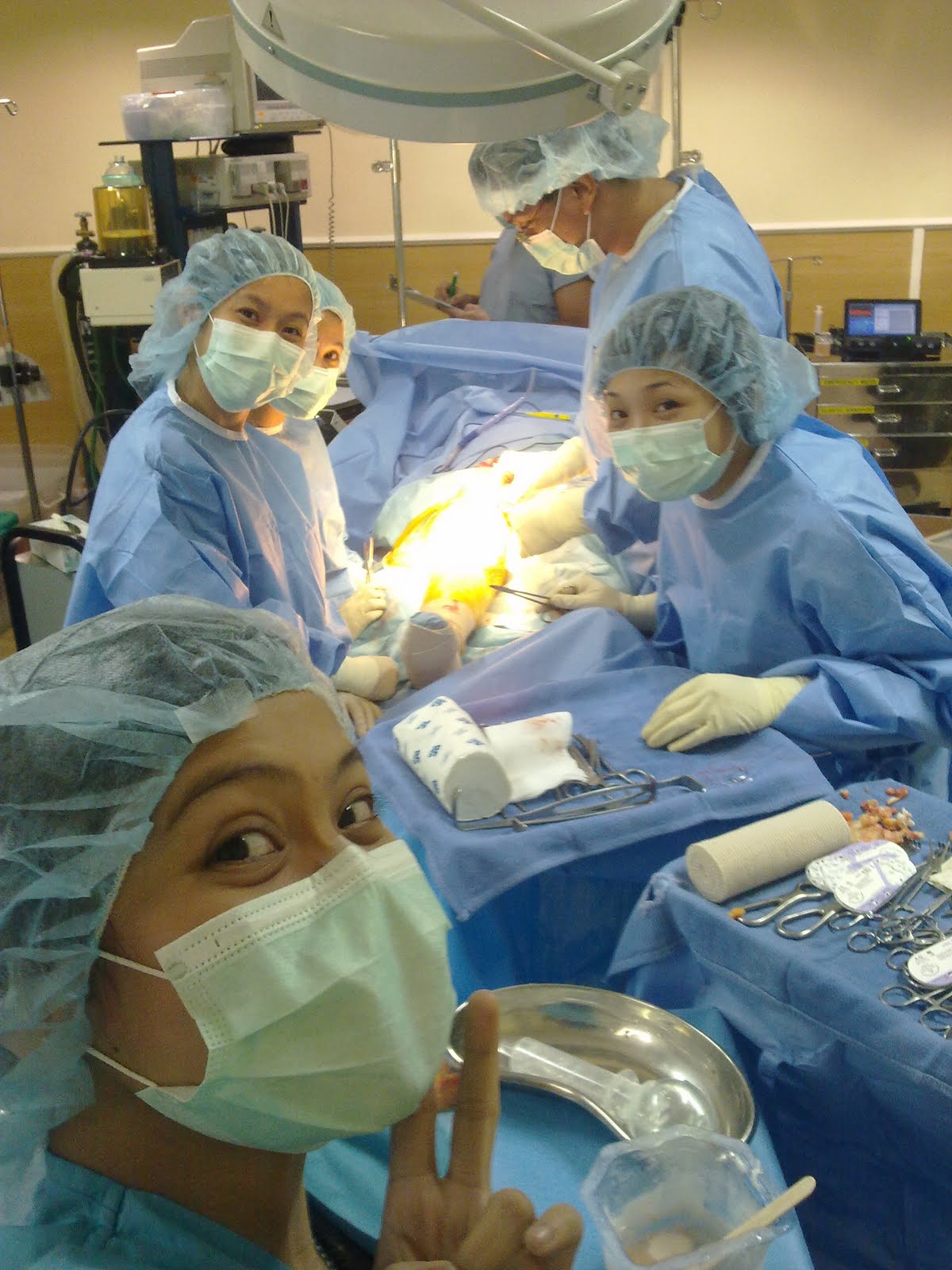
          However, I believe there’s one thing I can do very well: I can diagnose and treat musculoskeletal problems or injuries, perform orthopedic surgery, with the help of my colleagues, if necessary.


          This is one thing I enjoy doing and would like my career to focus on.

          Whenever I come home at night, my wife would know if I did surgery or not. “You look happy. Naka-opera ka, no?” (You did operate today, right?)  


           Doing orthopedic surgery is where I get happiness and thrill. When I do it, I feel my adrenaline rushes.  Not only that, it’s probably the only thing I do that can make me have impact on others. If I do that, I can help people have more mobility and have more quality of life. I feel I can help and bless others when I do this.


           So, except for orthopedic surgery, everything else, I delegate or hire someone better than me to do the needed tasks.  I call my dependable mechanic, Lito, to fix my car if it suddenly conks out.  I call the PLDT technician if the dial tone of our landline suddenly disappears (ghost dial tone? I have heard about ghost ships, but ghost dial tone?)


           So what’s my point?


           I think every person, should do what he or she enjoys doing, should be good at it to truly enjoy it, make it his or her career and finally, get paid for it.


            Get paid for it? 


            Some of my colleagues in the medical profession probably will crucify me now for even talking about getting paid for my medical services.  This is a very sensitive topic that should be discussed only between the patient and the doctor, right?  I agree. 


            But this is what I like to believe in. We need to find what we love doing and get paid for it. We need to turn our passion into our profession. When you enjoy your work, it isn’t work. It’s play. And that keeps your body running smoothly and healthy. If you can see your job as a sacred mission from God, you wake up in the morning with joy and excitement. Your body gets the message: “I am ready to work so I can bless the world.”


            We give 60% of our waking hours to our jobs.  If we’re unhappy with our jobs, that makes us unhappy 60% of our lives!


            Making your passion your job isn’t only enjoyable. It may be your best bet to provide adequately for you and your family’s needs and earn extra for generosity. Besides, people like me aren’t celibate priests or some religious missionaries living in the boondocks (I have great respect for them). I have a family to feed, with 3 small children depending on me financially for at least the next 20 years.


            Every person should be given the chance to do what he or she likes and get paid for it.


            Period.

Blog Archive